

Summary: Film abrasive discs have revolutionized the way professionals achieve precision in surface finishing. This article explores their composition, applications, benefits, and tips for selecting the right disc to meet your project needs.
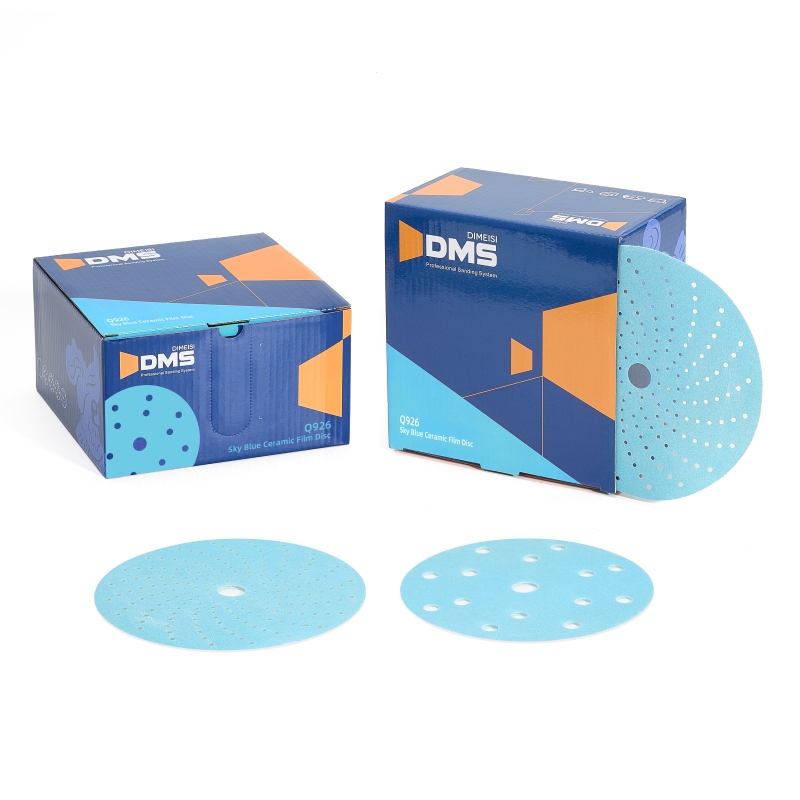
Table of Contents
- Introduction to Film Abrasive Discs
- Construction and Materials
- Key Advantages
- Common Applications
- Tips for Selecting the Right Disc
- FAQ
- Contact DMS
Introduction to Film Abrasive Discs
Film abrasive discs are high-performance tools used for precision sanding and surface preparation. Unlike traditional paper-based discs, film discs utilize a durable polymer backing that enhances performance, longevity, and consistency. Professionals across automotive, metalworking, woodworking, and industrial sectors rely on these discs for achieving smooth, uniform surfaces efficiently.
Construction and Materials
Understanding the construction of film abrasive discs is critical to appreciating their performance advantages:
- Backing Material: Made from polyester or other durable films, offering tear resistance and flexibility.
- Abrasive Coating: Aluminum oxide or zirconia grains are commonly used for their long-lasting cutting ability.
- Adhesive Layer: Ensures the abrasive grains are firmly bonded, maintaining uniform wear.
- Open vs Closed Coat: Open coat discs reduce clogging with soft materials, while closed coat discs provide maximum cutting efficiency on harder surfaces.
| Component | Material | Function |
|---|---|---|
| Backing | Polyester film | Provides flexibility and tear resistance |
| Abrasive Grain | Aluminum oxide / Zirconia | Performs cutting and material removal |
| Adhesive | Resin-based | Holds grains uniformly on backing |
Key Advantages
Film abrasive discs offer several advantages over traditional sanding media:
- Longevity: Film backing resists tearing and maintains performance longer.
- Precision: Uniform grit distribution ensures consistent surface finishes.
- Heat Resistance: Suitable for high-speed sanding without warping or burning surfaces.
- Dust Management: Some designs incorporate open-coat grains to reduce clogging and improve efficiency.
Common Applications
Film abrasive discs are widely used in industries where high-quality surface finishing is critical:
- Automotive: For paint preparation, clear coat sanding, and bodywork repairs.
- Metalworking: Removing rust, deburring edges, and finishing stainless steel surfaces.
- Woodworking: Fine sanding of hardwoods and laminates to achieve smooth finishes.
- Industrial Manufacturing: Surface preparation for coatings and adhesives.
Tips for Selecting the Right Disc
Choosing the correct film abrasive disc is crucial for optimal results. Consider the following:
- Grit Size: Lower grits for aggressive material removal, higher grits for finishing.
- Coating Type: Open coat for soft materials, closed coat for hard surfaces.
- Backing Strength: Thicker backing for heavy-duty sanding; thinner backing for contour work.
- Compatibility: Ensure disc size matches your sander and speed requirements.
FAQ
Q1: Can film abrasive discs be used on both metal and wood?
A1: Yes, depending on the grit and coating type, they are versatile across multiple materials.
Q2: How long do film abrasive discs typically last?
A2: Their durability exceeds paper-based discs, often lasting several times longer under similar usage conditions.
Q3: Are they compatible with all sanders?
A3: Most film discs are designed for standard orbital, random orbital, and finishing sanders. Always check the manufacturer’s specifications.
Contact DMS
For premium quality film abrasive discs and expert guidance, visit DMS Film Abrasive Discs. Our team is ready to help you select the perfect solution for your surface finishing needs. Contact us today to enhance your production efficiency and achieve flawless results!