

How Do Film Abrasive Discs Deliver Superior Grinding Performance and Long-Term Efficiency?
2025-12-08
Film abrasive discs play a central role in precision grinding, surface finishing, automotive refinishing, woodworking, and metal fabrication. As industries shift toward higher accuracy, cleaner finishes, and reduced material waste, film-backed abrasives have become a preferred solution due to their enhanced durability, consistent cutting ability, and resistance to loading.
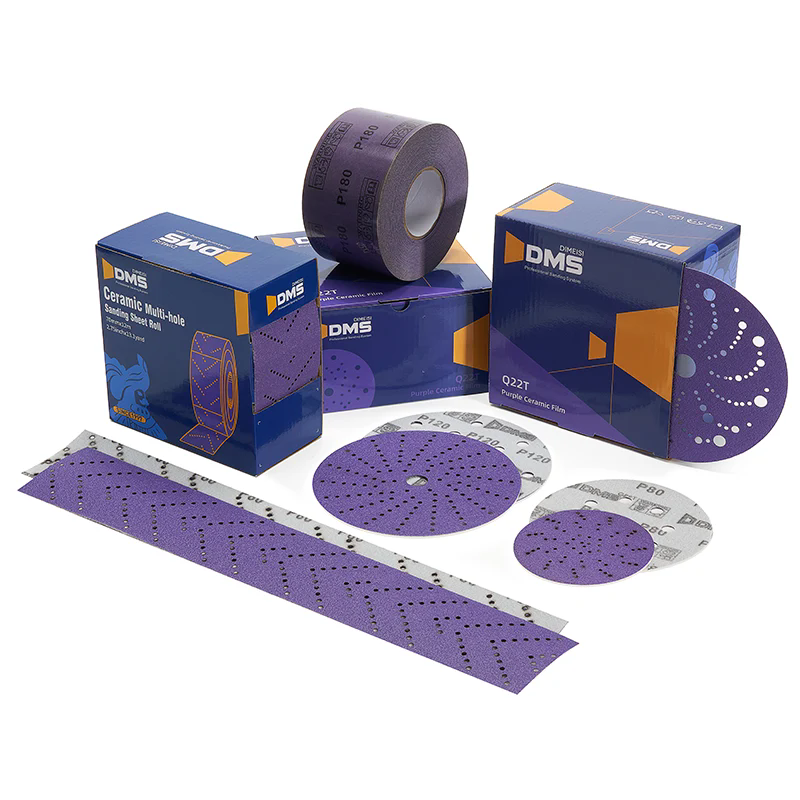
Below is a consolidated parameter overview to establish a professional reference point:
Film Abrasive Discs – Core Product Specifications
| Specification Category | Technical Details |
|---|---|
| Backing Material | High-strength polyester film |
| Abrasive Grain Options | Aluminum oxide, ceramic alumina, silicon carbide |
| Grit Range | 60# – 3000# |
| Coating Type | Open coat / Closed coat |
| Bonding | Resin over resin |
| Disc Diameter Options | 3”, 5”, 6”, 8” |
| Attachment System | Hook & loop / PSA |
| Applications | Automotive sanding, metal finishing, woodworking, composite preparation, precision polishing |
| Key Properties | Anti-clogging, waterproof, uniform scratch pattern, extended lifespan |
How Do Film Abrasive Discs Achieve High Precision and Consistent Cutting Performance?
Film abrasive discs achieve exceptional finishing performance due to the structural stability of their polyester film backing. Unlike traditional paper-backed discs, film substrates maintain consistent thickness, resist tearing, and distribute abrasive grains more evenly. This uniformity ensures a predictable scratch pattern and reduces variability in material removal.
The Advantage of Polyester Film Backing
Film offers enhanced tensile strength, perfect flatness, and moisture resistance. These characteristics allow the disc to maintain performance even under demanding or wet sanding environments. The smooth surface of the film backing also enables more precise distribution of abrasive grains, improving the repeatability of finishing outcomes.
Resin Bonding and Controlled Grain Structure
The use of resin-over-resin bonding strengthens adhesion and prevents premature grain shedding. Combined with engineered grain technologies—such as micro-fracturing ceramic alumina—the disc can maintain sharp cutting edges longer, contributing to extended disc life and reduced downtime for disc changes.
Anti-Clog Coatings for Efficiency
Anti-loading coatings reduce dust accumulation, especially during woodworking and automotive paint applications. By keeping the abrasive surface clean, the discs can continue cutting efficiently while preventing burn marks or swirl defects.
Wet and Dry Compatibility
Because polyester film is waterproof, film abrasive discs can be used for wet sanding operations, enabling cooler grinding temperatures, reduced dust, and enhanced surface clarity in finishing tasks such as automotive clear coat leveling.
Improved Edge Retention
Film materials resist curling, cracking, and deformation. This edge stability allows technicians to sand details and tight contours with better control, making film discs suitable for high-precision work in electronics, aerospace components, and fine woodworking.
How Do Film Abrasive Discs Compare to Paper-Backed Discs in Industrial Applications?
Comparing film abrasive discs to traditional paper-backed discs highlights significant performance differences that influence productivity and finish quality.
Durability and Tear Resistance
Film discs outperform paper discs in environments where pressure and heat fluctuate. Paper tends to weaken under humidity and prolonged use, while film remains stable. This durability directly supports industries that require continuous sanding cycles.
Surface Finish Quality
Film discs maintain a more consistent grit distribution, translating into uniform scratch patterns. This is particularly important for applications such as preparing automotive surfaces for painting or polishing composite materials to achieve a mirror-level finish.
Productivity and Longevity
Because film discs last longer and cut more efficiently, they reduce both consumable costs and labor hours. Workers spend less time replacing discs and more time achieving required surface results.
Compatibility with Multiple Substrates
Film abrasive discs work effectively on metal, plastic, wood, painted surfaces, gelcoat, and composites. Their versatility supports workshops that need a single abrasive solution adaptable to multiple tasks.
Better Dust Management
Film-backed abrasive discs pair well with vacuum hole patterns, improving dust extraction efficiency and supporting clean work environments. This added benefit contributes to worker safety and compliance with industrial standards.
Best Use Cases for Film Abrasive Discs Across Multiple Industries
Film abrasive discs deliver measurable value across industries that demand accuracy, predictability, and cost-effective performance.
Automotive Refinishing
Automotive repair professionals use film abrasive discs for paint removal, primer leveling, orange peel correction, clear coat refinement, and defect elimination. The discs’ ability to produce consistent scratch patterns makes polishing more efficient and helps achieve high-gloss finishes.
Metal Fabrication
Film discs support deburring, rust removal, weld preparation, and precision finishing of stainless steel, aluminum, copper, and alloy components. Their enhanced cutting power and heat resistance are well suited for heavy-duty tasks.
Woodworking and Furniture Production
In carpentry and furniture workshops, film abrasive discs handle hardwood sanding, veneer finishing, edge smoothing, and lacquer preparation. Their anti-clogging performance minimizes surface scratches and prevents resin buildup.
Composite Manufacturing
Industries such as marine, aerospace, and sporting goods rely on film discs to finish fiberglass, carbon fiber, and epoxy surfaces. The waterproof design makes wet sanding effective for minimizing dust and preventing fiber fuzzing.
Electronics and Precision Components
Film abrasives support applications requiring extremely fine grits and precise surface profiles. They assist in preparing delicate components in semiconductor processing and optical manufacturing.
The Future of Film Abrasive Discs: What Trends Are Shaping Next-Generation Abrasive Technology?
With growing emphasis on efficiency, sustainability, and precision manufacturing, abrasive technology is advancing rapidly. Several key developments are shaping the future of film abrasive discs.
Advanced Micro-Replicated Grain Technology
Engineered abrasive structures will increasingly use micro-replication to create consistent, patterned mineral formations. These formations improve cutting speed, extend disc life, and reduce heat generation.
Sustainable and Eco-Optimized Production
Manufacturers are focusing on low-VOC bonding technologies, recyclable packaging, and energy-efficient production processes. As sustainability requirements tighten, film abrasive discs will incorporate more environmentally responsible materials.
Automated Sanding Integration
As robotics and CNC systems become standard in factories, film abrasive discs are being optimized for automated sanding heads. Their uniform thickness and predictable wear patterns make them ideal for robotic precision finishing.
Multi-Layer and Multi-Coat Abrasive Structures
Future film discs may incorporate layered abrasive systems that self-renew during use. These structures ensure consistently sharp cutting edges throughout the disc’s service life.
Enhanced Heat-Resistant Resin Systems
Innovations in bonding agents will allow film discs to handle higher friction temperatures, especially in metal grinding operations where thermal stability is essential.
Smart Surface Identification
Emerging smart abrasive surfaces may include color-change indicators that reveal wear levels or signal optimal pressure points, assisting operators in maintaining consistent technique.
Common Questions About Film Abrasive Discs
Q1: What makes film abrasive discs more durable than traditional paper discs?
A1: Film abrasive discs use polyester film backing, which resists tearing, moisture, curling, and deformation. This stability maintains consistent cutting performance even under high pressure, extended use, or wet sanding conditions. The material’s uniform thickness also supports even grain distribution, improving the predictability and lifespan of the abrasive surface.
Q2: Which grit range should be used for automotive clear coat sanding?
A2: For leveling clear coats, technicians typically use 1000#–2000# grits. For defect removal and polishing preparation, ultra-fine grits such as 2500#–3000# deliver a refined scratch pattern suitable for high-gloss finishing. The exact choice depends on the desired surface profile and the polishing system that follows.
Why Film Abrasive Discs Are a Long-Term Investment for Industrial Efficiency
Film abrasive discs offer a combination of durability, precision, and versatility that outperforms many traditional abrasive solutions. Their stability under pressure, uniform grain distribution, resistance to clogging, and compatibility with both dry and wet sanding operations make them indispensable across automotive, woodworking, metal fabrication, and composite manufacturing sectors. As the demand for higher accuracy and cleaner finishing grows, film abrasives will continue evolving with advanced grain engineering, sustainable manufacturing methods, and integration into automated production systems.
For industries seeking consistent quality, reduced consumable costs, and reliable performance, film abrasive discs represent a strategic choice. Brands like DMS support these needs with professionally engineered film abrasive solutions designed for long-term operational value, efficiency, and precision finishing.
For more technical information or product inquiries, contact us to receive tailored support for industrial applications.