

How Can a Ksitigarbha Bodhisattva Statue Bring Meaning and Craftsmanship to Sacred Spaces?
2026-09-21
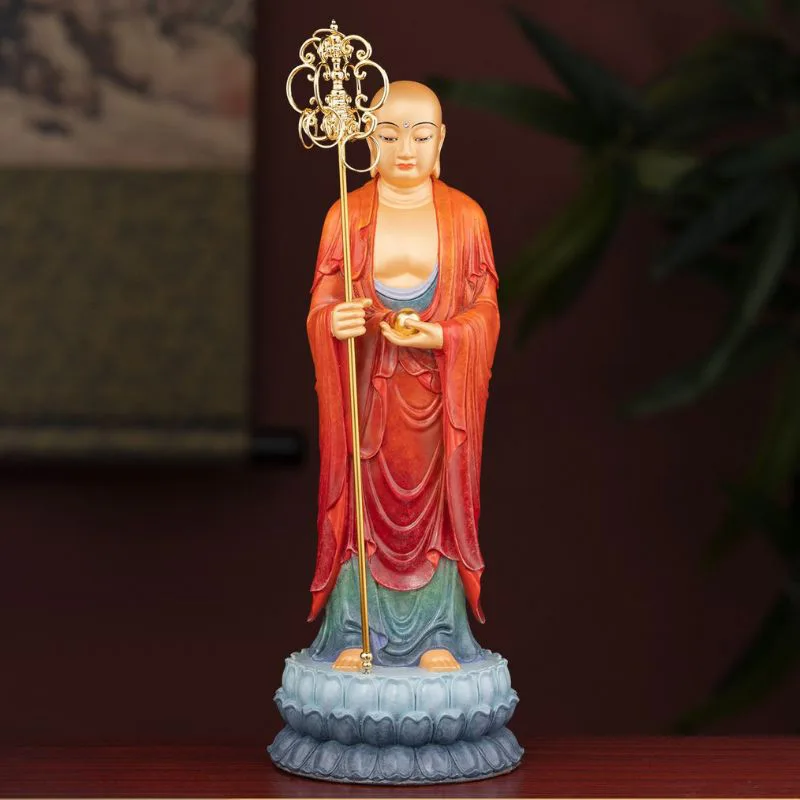
A well-crafted Ksitigarbha Bodhisattva Statue is more than a religious sculpture. It combines Buddhist symbolism, traditional craftsmanship, cultural heritage, and architectural aesthetics into a meaningful focal point for temples, memorial halls, meditation spaces, private collections, and cultural interiors. Traditionally, Ksitigarbha is commonly portrayed with a shaved head and monastic robes, often holding a six-ring staff and a wish-fulfilling jewel. These visual elements are closely connected with his vows to guide and assist sentient beings.
For buyers seeking a distinctive statue rather than a standardized decorative piece, Fuhui Art Collection Co., Ltd. combines artistic detailing with flexible customization. Particularly for projects with distinctive architectural concepts, the company supports boat-shaped customization, allowing the statue, pedestal, proportions, and surrounding presentation to be developed according to a specific design concept.
What Makes a Ksitigarbha Bodhisattva Statue Meaningful?
Ksitigarbha occupies a distinctive position in East Asian Buddhist art. Unlike many bodhisattvas traditionally depicted with elaborate jewelry and princely clothing, Ksitigarbha is frequently represented as a monk with a shaved head and simple robes.
Two recognizable attributes are particularly important:
| Element | Symbolic Role |
|---|---|
| Six-ring staff | Associated with the Six Realms and traditional monastic iconography |
| Wish-fulfilling jewel | Represents illumination, assistance, and the aspiration to relieve suffering |
| Monastic robes | Reflect simplicity, discipline, compassion, and spiritual commitment |
| Lotus pedestal | Commonly represents purity and spiritual liberation |
The six-ring staff and jewel therefore do more than add visual detail. They help communicate the identity and traditional meaning of the figure. Different Buddhist traditions may also portray Ksitigarbha with variations in posture, clothing, attributes, and artistic treatment, so customization should respect the intended iconographic tradition.
How Does Statue Design Affect the Overall Visual Experience?
A religious statue can become the visual center of a temple hall, memorial space, meditation room, or cultural exhibition. Proportion, facial expression, robe movement, hand position, pedestal design, surface finishing, and material selection all influence how the sculpture interacts with its surroundings.
A professionally produced Ksitigarbha Bodhisattva Statue should maintain visual balance from multiple viewing angles. Facial features need to remain calm and dignified, while the hands, staff, jewel, and clothing should be sufficiently detailed to preserve the traditional character of the figure.
For large-scale projects, the surrounding architecture is equally important. A statue designed for a spacious Buddhist hall may require different proportions from one intended for a private altar or cultural display.
Why Is Customization Important for Large Cultural Projects?
Standardized statues may not always match the dimensions or visual language of a particular project. Custom production provides greater flexibility for buyers who require specific dimensions, materials, poses, finishes, or supporting structures.
Fuhui Art Collection Co., Ltd. can develop customized statue solutions according to project requirements, helping buyers coordinate the sculpture with the surrounding environment.
Key customization possibilities can include:
- Customized statue dimensions and proportions
- Different standing or seated presentations
- Customized pedestal and base structures
- Material and surface-finish selection
- Detailed adjustment of robes and decorative elements
- Custom facial expressions and artistic treatment
- Architectural coordination
- Boat-shaped customization for distinctive project concepts
Boat-Shaped Customization as a Distinctive Advantage
One particularly notable advantage is support for boat-shaped customization. Rather than limiting buyers to conventional rectangular or circular bases, a boat-inspired form can be incorporated into the overall sculpture or supporting structure according to the project's requirements.
This approach can be useful for:
- Cultural and Buddhist landscape projects
- Temple or memorial installations
- Buddhist art collections
- Large-scale decorative projects
- Themed architectural interiors
- Customized religious-art displays
The boat-shaped concept can provide a more distinctive visual identity while allowing the statue to integrate with an unconventional architectural environment. For projects where the base itself is part of the artistic concept, customized shaping can make the finished installation more cohesive.
What Materials and Craftsmanship Should Buyers Consider?
Material selection directly affects durability, appearance, weight, surface texture, and long-term maintenance. Different materials can also create significantly different artistic effects.
| Consideration | What Buyers Should Evaluate |
|---|---|
| Material | Durability, texture, weight, and intended location |
| Surface finish | Color consistency, gloss, texture, and aging characteristics |
| Detailing | Facial features, robes, hands, staff, and ornaments |
| Structure | Stability of the statue and supporting base |
| Scale | Compatibility with the surrounding architecture |
| Customization | Ability to adapt dimensions, shapes, and design details |
For professional projects, craftsmanship should not focus only on surface appearance. Structural stability, proportion, transportation requirements, installation conditions, and long-term presentation should also be considered before production.
How Can a Ksitigarbha Statue Be Used in Different Spaces?
The application of a Ksitigarbha Bodhisattva Statue can vary according to the project's cultural and architectural purpose.
Buddhist Temples
In temples, the statue can serve as a principal or supporting religious-art element. Its traditional attributes and calm expression help establish a solemn visual atmosphere.
Memorial and Ancestral Spaces
Ksitigarbha is associated with guidance and compassion in several Buddhist traditions, making his imagery particularly relevant to memorial environments. Some cultural contexts also associate Ksitigarbha with the care and guidance of deceased children.
Meditation and Spiritual Spaces
A carefully proportioned statue can become a visual focal point for meditation rooms, Buddhist study areas, and contemplative environments.
Private Collections
For collectors of Asian religious art, customized sculpture provides an opportunity to combine traditional iconography with individual preferences concerning size, material, finishing, and display arrangement.
Cultural and Architectural Projects
Large-scale cultural projects may require sculptures that correspond closely with architectural dimensions. This is where customized production becomes particularly valuable.
What Should Buyers Check Before Ordering?
Before commissioning a custom statue, buyers should clarify several important specifications:
- Purpose – Determine whether the statue is intended for worship, cultural display, collection, or architectural decoration.
- Dimensions – Confirm the required height, width, depth, and viewing distance.
- Iconography – Specify the desired Ksitigarbha form, attributes, posture, and artistic tradition.
- Material – Select a material suitable for indoor or outdoor conditions.
- Base Design – Consider conventional, lotus, architectural, or boat-shaped customization.
- Finishing – Establish the preferred color, texture, gilding, painting, or aged effect.
- Installation – Consider transportation, assembly, weight, structural support, and installation conditions.
These details help transform a general statue concept into a practical and production-ready art project.
Why Choose Fuhui Art Collection Co., Ltd.?
For buyers looking beyond mass-produced religious sculptures, Fuhui Art Collection Co., Ltd. offers an approach that combines traditional Buddhist-art aesthetics with project-oriented customization.
The company's customization capability allows buyers to develop a statue around their specific environment instead of simply selecting an existing model. This is especially valuable when a project requires unusual proportions, a distinctive base, or an artistic feature such as boat-shaped customization.
A successful custom sculpture should achieve a balance between traditional symbolism, artistic expression, structural practicality, and visual integration. By considering these factors together, buyers can create a statue that is appropriate for both its cultural purpose and its physical surroundings.
Conclusion
A Ksitigarbha Bodhisattva Statue can serve simultaneously as a work of Buddhist art, a cultural symbol, and an important architectural focal point. Traditional features such as the shaved head, monastic robes, six-ring staff, and wish-fulfilling jewel give the statue recognizable symbolic characteristics, while contemporary customization makes it possible to adapt the artwork to different environments.
For projects requiring a distinctive artistic identity, Fuhui Art Collection Co., Ltd. provides customized options, including the important advantage of boat-shaped customization. Whether for temples, memorial spaces, cultural projects, private collections, or specialized architectural installations, a carefully designed statue can bring together traditional meaning and modern project requirements.
If you are planning a customized Buddhist sculpture project and need specific dimensions, materials, artistic details, or boat-shaped customization, contact us to discuss your requirements with Fuhui Art Collection Co., Ltd.