

Can a Glittering Rhinestone Cuban Link Chain Be Worn in Water Without Damage
2026-09-15
A Glittering Rhinestone Cuban Link Chain draws attention the moment it catches the light, and Kunyu understands that buyers want that shine to last. Water is one of the biggest threats to any rhinestone jewelry, yet the damage is not always immediate or obvious. Moisture slowly affects adhesives, platings, and base metals, which means the real answer depends on construction quality and daily habits. Kunyu has compiled the following professional guidance to help you decide when to wear your chain and when to take it off.
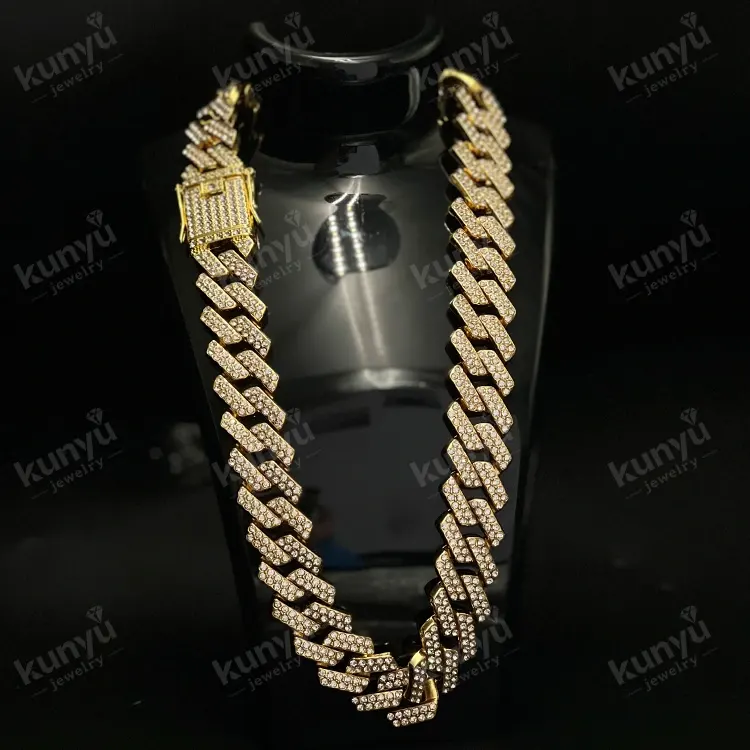
How Water Affects a Glittering Rhinestone Cuban Link Chain
Rhinestones are usually fastened with adhesive or metal prongs. The Cuban link base may be stainless steel, brass, copper, or a zinc alloy. When water reaches the settings, it can soften glue, seep under plating, and trigger oxidation. The table below summarizes the most common exposure scenarios.
| Water Source | Risk Level | Primary Damage Mechanism |
|---|---|---|
| Tap water | Moderate | Minerals and chlorine dull stone surfaces |
| Rainwater | Low to moderate | Pollutants and mild acids leave residue |
| Swimming pool | High | Chlorine degrades adhesive and plating |
| Saltwater / ocean | High | Salt accelerates corrosion and pitting |
| Shower water | Moderate | Soap scum builds up around settings |
| Sweat | Moderate | Oils and acids reduce long-term shine |
Four Factors That Decide Water Resistance
1. Base Metal Selection
Stainless steel resists moisture far better than brass or copper. A Glittering Rhinestone Cuban Link Chain built on stainless steel will outperform one built on a plated alloy.
2. Plating Thickness and Method
PVD coatings and thick gold plating last longer than thin electroplating. Thin plating wears away quickly once moisture is present.
3. Stone Setting Technique
Prong-set rhinestones tolerate water better than glue-set stones. Adhesive softens in warm water, which can cause stones to loosen and fall out.
4. Protective Sealant
Some manufacturers apply a clear sealant. This slows water penetration but does not make the chain fully waterproof.
Professional Care Checklist
-
Remove the chain before entering a pool, ocean, or hot tub.
-
Take it off before showering, bathing, or using a sauna.
-
Wipe the chain dry with a soft cloth after any moisture contact.
-
Store it in a dry pouch away from humid bathrooms.
-
Clean with a dry soft-bristle brush instead of soaking it in liquid.
-
Inspect stone settings monthly for looseness or adhesive failure.
Activity-by-Activity Reference
| Activity | Safe to Wear? | Recommended Action |
|---|---|---|
| Hand washing | Brief exposure | Dry immediately after |
| Light rain | Not recommended | Wipe down once indoors |
| Shower | No | Remove before entering |
| Swimming pool | No | Chlorine damage is often permanent |
| Beach / ocean | No | Salt and sand cause corrosion |
| Gym / heavy sweat | Use caution | Clean and dry after exercise |
Glittering Rhinestone Cuban Link Chain FAQ Common Questions
Can a Glittering Rhinestone Cuban Link Chain be worn in the pool without losing stones?
No, pool chlorine breaks down the adhesive that holds rhinestones in place, and repeated exposure will cause stones to loosen or fall out over time.
Does a Glittering Rhinestone Cuban Link Chain tarnish faster after contact with sweat?
Yes, sweat contains salts and acids that attack plating and base metals, so the chain should be wiped clean after every workout or long wear session.
Is it safe to clean a Glittering Rhinestone Cuban Link Chain with water and soap?
No, soaking the chain in soapy water can weaken the stone adhesive and leave residue in the settings, so dry cleaning with a soft cloth or brush is the safer method.
Final Recommendations from Kunyu
A Glittering Rhinestone Cuban Link Chain can survive brief contact with water, but it is not designed for pools, oceans, or long showers. Consistent care preserves both the sparkle of the stones and the integrity of the links. Kunyu supplies quality pieces and practical maintenance guidance for customers who want durable shine. Contact us today to choose the right Glittering Rhinestone Cuban Link Chain for your style and receive expert care advice tailored to your jewelry.