

ODM CNC Parts: Unlocking Custom Precision Manufacturing for Your Products
2026-09-23
Off-the-shelf parts rarely match your product's exact geometry. ODM CNC parts change that, unlocking custom precision manufacturing that follows your CAD model to the micron—no more compromising on tolerances, materials, or finishes. But true precision isn't just about machines; it's about the people programming them. Peak Fasten has spent years perfecting that craft, turning complex designs into repeatable, production-ready components without the usual delays. If you've ever wondered how custom CNC machining can streamline prototyping, reduce assembly headaches, or give your product a competitive edge, this guide breaks it down step by step.
Why Stock Parts Rarely Match Your Custom Design
Off-the-shelf components are built to satisfy broad averages, not your specific geometry. A stock barrel, for instance, might have a chamber tolerance that works acceptably across dozens of firearm models, but when you're chasing a tight fit for a custom slide or a specific ammunition profile, those generic allowances quickly become noticeable. The same applies to trigger groups, bolt carriers, and even small pins: manufacturers optimize for mass production speed and cost, leaving gaps that your design never asked for.
Material selection is another quiet culprit. Stock parts are often produced from mid-range steels or polymers chosen for ease of machining rather than the exact stress profile your design demands. If your custom build calls for a lighter reciprocating mass or higher heat resistance, an off-the-shelf part will either wear prematurely or simply refuse to cycle reliably. You're left compensating with shims, polishing, or outright replacement—none of which should be necessary if the part had been made to your drawing in the first place.
Finally, finishing and surface treatments rarely align. A stock component might come with a generic nitride or phosphate coating that's fine for casual use but completely wrong for a custom application requiring corrosion resistance in marine environments, or a precise dimensional thickness after coating. When you're already investing in a unique design, accepting stock tolerances means accepting compromise where you least want it.
What a CNC Quote Actually Reveals About Your Supplier
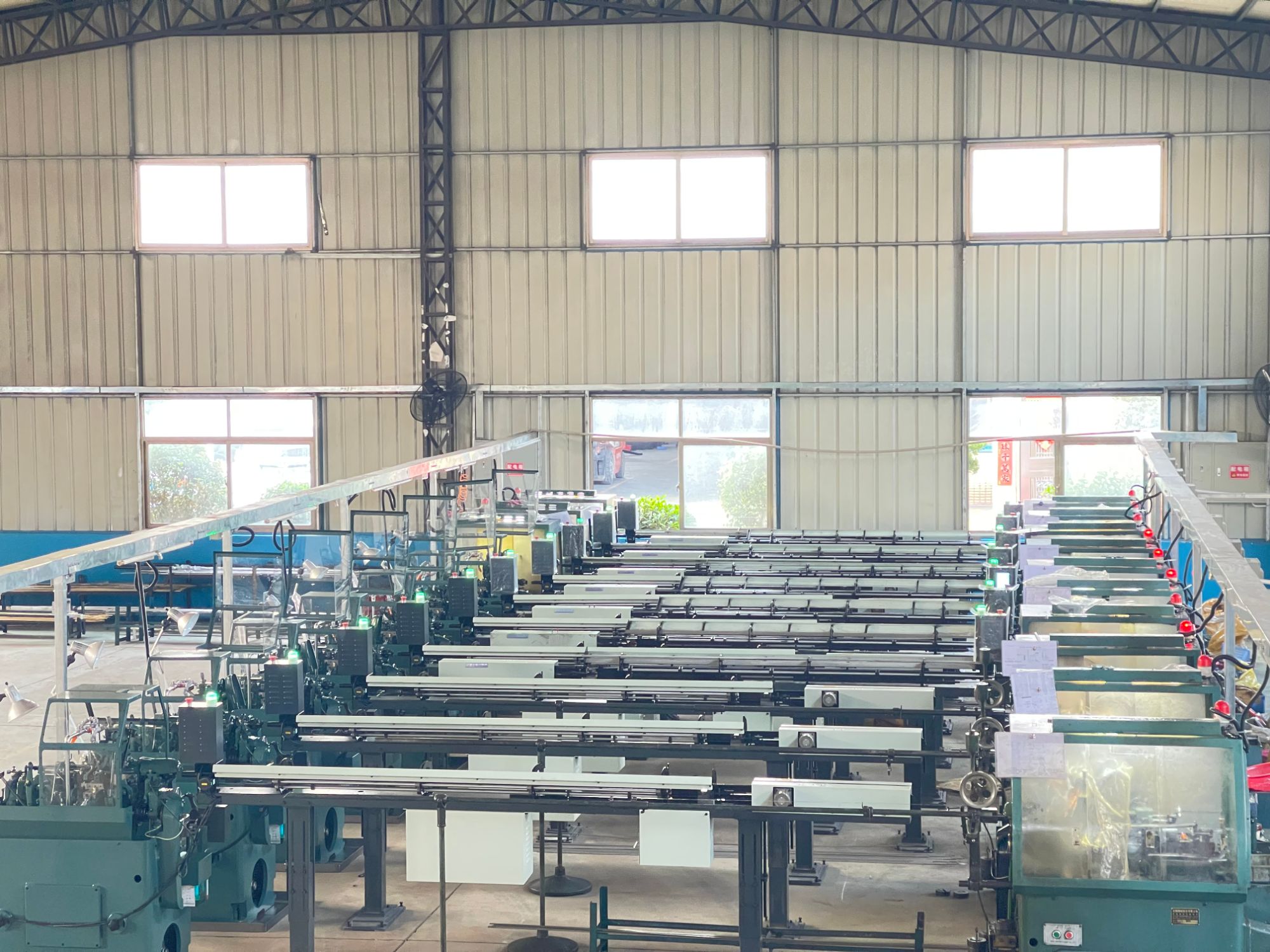
A CNC quote is rarely just a number. It often shows how organized the supplier is. When a shop lists material grade, surface finish, tolerances, and even inspection criteria without being asked, that attention to detail usually carries over to the machining work itself. Vague line items or missing specifications, on the other hand, suggest you may need to spend extra time chasing clarifications later.
Lead time and pricing structure also tell a story. A supplier that breaks down setup, programming, and per-part costs is more likely to have invested in proper planning. If the quote arrives with a single lump sum and no mention of tooling or QC, you could be dealing with someone who cuts corners or hides fees. How quickly they respond to questions about the quote can reveal whether communication will be smooth once production starts.
Finally, look at the assumptions stated in the quote. The best suppliers list what they expect from you—drawing revisions, material certificates, tolerance callouts—so there are no surprises. If a quote seems too cheap or too fast compared to others, it may signal unrealistic promises rather than efficiency. Reading between the lines of a CNC quote helps you spot a partner who values clarity over a rushed sale.
Material Choices That Go Beyond Standard Aluminum
Standard aluminum alloys like 6061 or 5052 offer decent strength and corrosion resistance, but they hit limits when a design demands extreme stiffness, fatigue life, or thermal stability. For those edges of the envelope, engineers often turn to 7075-T6 aluminum first—same familiar processing, but nearly double the yield strength. The trade-off is weldability and corrosion resistance, which pushes teams into protective coatings or anodizing.
When even high-strength aluminum falls short on weight or stiffness, carbon fiber reinforced polymer (CFRP) becomes the default conversation. A unidirectional carbon laminate can have a specific stiffness three to four times that of aluminum, which matters more in aerospace and high-end sporting goods than any static spec sheet suggests. The catch is cost and manufacturing complexity: layup, curing, and inspection don't scale like extruding or stamping aluminum.
Titanium and magnesium each carve out narrower niches. Titanium brings fatigue strength and biocompatibility at roughly half the weight of steel, but machining it is slow and expensive. Magnesium alloys are lighter than aluminum and damp vibration well, yet they corrode easily and require careful surface treatment. Choosing among these materials rarely comes down to a single property—it's about how the part will be made, maintained, and loaded over its lifetime.
Tolerance Decisions That Balance Precision and Cost
In manufacturing, the impulse to tighten tolerances often stems from a desire for "safety," but it rarely comes free. A shift from ±0.1 mm to ±0.02 mm might sound modest on a drawing, yet it can force a shop to abandon standard tooling for grinding or honing, add in-process gauging, and accept higher scrap rates. The real question isn't whether a part can be made to a given tolerance, but whether that tolerance is functionally necessary. Bearing journals, mating seal surfaces, and press-fit bores earn their tight numbers; cosmetic edges or non-locating faces usually don't.
Cost rises non-linearly as tolerance bands shrink, especially once you cross the capability threshold of your existing process. A practical approach starts with a stack-up analysis: identify which dimensions directly affect assembly performance, then allocate the widest acceptable tolerance to each contributor. For less critical features, specify generous ranges and rely on functional gauging rather than 100% CMM inspection. Another often-overlooked lever is datum selection—choosing stable, accessible datums can make a tight tolerance easier to hold without extra cost. Ultimately, a balanced tolerance decision leaves just enough room for process drift while still protecting the design intent.
Scaling from Prototype to Production Without Losing Accuracy
A model that performs beautifully on a clean laptop dataset often degrades the moment it touches real traffic. The usual suspects are not architecture choices but distribution shifts: missing fields, timestamp skew, sudden spikes in rare categories, or fields that were never populated during prototyping. Before reaching for a bigger model or a new loss function, lock down an evaluation harness that reflects production conditions. Build a golden dataset from logged examples, including edge cases your prototype ignored, and make it a non-negotiable gate for every release.
The next step is to separate offline evaluation from online observation. Offline, replay historical requests and measure per-slice accuracy, paying attention to long tail classes instead of just overall metrics. Online, run the new version in shadow mode or on a tiny fraction of traffic while comparing its predictions against the current production model. Capture disagreement patterns and log input distributions over time. This gives you a concrete signal when the world changes, without letting a silent drift erode performance.
Accuracy in production is not a fixed property but a loop that needs constant calibration. When drift shows up, resist the urge to blindly retrain. First check whether the upstream data pipeline introduced encoding mistakes or whether the labeling logic itself needs revision. Then update your golden dataset with carefully sampled new cases, retrain with the old and new data mixed, and evaluate against the same slices you have been tracking from day one. Keeping accuracy while scaling means treating model updates as small, reversible experiments rather than dramatic overhauls.
How to Spot a CNC Partner Who Cuts Corners
Look for a shop that treats tolerance as a promise, not a suggestion. Ask how they verify dimensions on complex features. A partner worth keeping will show you inspection reports, talk about CMM routines, and admit when a setup needs rework. The ones cutting corners will wave off questions with 'we've always done it this way' or insist their machinists 'just know' when a part is right. That's where scrap hides.
Pay attention to how they handle material certs and plating specs. If you ask for domestic 6061 and they quote 'equivalent' without clarifying the source, that's a corner being shaved. Same with finishing: a shop that never mentions masking, racking, or thickness variation probably isn't controlling the process. Real partners bring up these details before you do, because they know it affects fit and life in the field.
Watch their reaction when you request a first article or a change mid-run. Defensiveness, delay, or an invoice for 'extra' checking often signals a process built on hope rather than verification. A dependable CNC partner will send photos of setups, flag tool wear before it becomes a problem, and treat your revision as part of the job, not an interruption.
FAQ
It stands for original design manufacturing. Instead of simply machining a customer-supplied drawing, the supplier takes an active role in refining the design, choosing workable tolerances, and sometimes developing the part from a rough concept. This helps bridge the gap between an idea and a production-ready component.
OEM usually focuses on building to an existing specification. ODM adds a layer of design ownership and problem-solving. The shop may suggest geometry changes, material swaps, or fixturing improvements that make the part cheaper to produce, easier to assemble, or more consistent across batches.
Medical devices, robotics, aerospace, automotive prototyping, and consumer electronics often rely on this approach. Any field where tight tolerances, repeatability, and design iteration matter can benefit, especially when the product is still evolving or has complex mechanical requirements.
Many shops routinely work within ±0.005 mm to ±0.01 mm, depending on the feature size and material. The real value is not just hitting a number on a drawing but understanding which tolerances actually affect function, so you avoid paying for unnecessary precision.
Aluminum alloys like 6061 and 7075, stainless steels, titanium, brass, and engineering plastics such as PEEK and acetal. The choice depends on strength, weight, thermal behavior, and whether the part needs post-machining treatments like anodizing or passivation.
It typically starts with a sketch, a CAD model, or even a description of the problem. The supplier reviews manufacturability, proposes adjustments, prototypes a few units, and then moves into pilot production. Feedback loops at each stage help lock the design before scaling up.
Low volumes are actually one of the strengths. Because there is no hard tooling, changing a design between runs is fast and inexpensive. This makes ODM CNC ideal for startups, clinical trials, spare parts, and products that need frequent revisions before final release.
Look for a team that asks questions about the part's function, not just its dimensions. Check whether they offer in-house finishing, quality reports, and clear communication about lead times. A good partner will flag potential issues early instead of waiting until after parts are made.
Conclusion
Most off-the-shelf parts force your design to bend around someone else's dimensions, but ODM CNC parts flip that equation entirely. When you're tired of modifying stock components or stacking spacers to make things fit, a custom machining partner becomes the real unlock. The quoting process alone tells you a lot: a supplier who asks about your end-use, surface finish needs, and assembly constraints is thinking beyond just cutting metal. Materials matter too—beyond ubiquitous 6061 aluminum, options like 7075, titanium, stainless, or engineered plastics open doors for weight, strength, or chemical resistance that generic catalogs never cover.
Tolerances are where precision meets practicality: specifying ±0.005 mm everywhere inflates cost without adding function, but a skilled ODM partner helps you choose tight tolerances only where they truly affect performance. Moving from prototype to production requires a shop that treats fixturing, tool wear, and process documentation as seriously as the first article—otherwise accuracy drifts as volumes climb. And watch for red flags: vague lead times, no material certifications, or reluctance to share inspection reports often mean corners are being cut. A dependable CNC partner will walk you through each decision, from stock selection to final QC, so your product comes out exactly as designed—not just close enough.
Contact Us
Contact Person: Mason Lv
Email: [email protected]
Tel/WhatsApp: +86 13027998452
Website: https://www.peakfastentech.com