

Filling and Aluminum Foil Sealing Machine Exporter: What Global Buyers Need to Know
2026-10-16
When sourcing filling and aluminum foil sealing machines across borders, the difference between a smooth purchase and a costly mistake often comes down to knowing what to look for in an exporter. Global buyers face a maze of technical specifications, compliance requirements, and after-sales unknowns—yet many still rely on outdated checklists. Wanying Machinery has spent years navigating these exact pain points, and this guide distills what actually matters: from hidden quality signals to negotiation tactics that separate serious exporters from middlemen. If you’re tired of guesswork and want to make your next sourcing decision with confidence, the insights ahead will change how you evaluate suppliers.
Pin Down Your Fill Range and Viscosity Before Requesting Quotes
Getting a quote without knowing your fill range is like ordering a custom suit without taking measurements. Suppliers need to know whether you're packing lightweight powders or dense pastes, and how much product each container should hold. A narrow range, say 50 to 200 grams, lets them recommend the right auger or piston filler without padding the price for unnecessary flexibility. If you leave it vague, you'll either get quotes that bounce all over the map or vendors who quietly assume the worst-case scenario.
Viscosity is the other half of the equation, and it trips up even experienced buyers. Thin, water-like liquids flow easily into a gravity filler, but a thick gel or cream demands a pump or piston system with higher torque. Describe your product in practical terms: does it pour like milk, cling to a spoon like honey, or hold its shape like cold peanut butter? Attaching a short video of the product moving in a container can save a week of back-and-forth emails.
Before you hit send on that quote request, run a quick test in your own facility. Take the actual product—not a stand-in—and fill a few containers by hand, timing how long it takes to reach your target weight or volume. Note the temperature, because viscosity shifts as things warm up or cool down. Those numbers, even rough ones, give suppliers a baseline to work from and often cut the quoted lead time by a third.
Foil Seal Reliability Hinges on Bottle Neck Finish, Not Just Heat
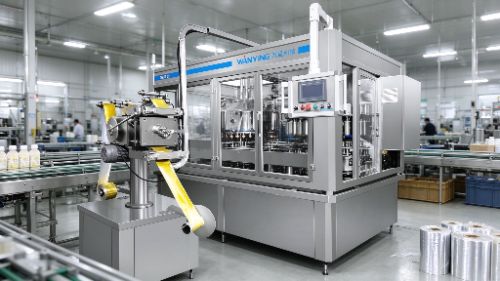
Ask any packaging engineer why a foil seal failed and the first suspect is usually the induction sealer's temperature. But a growing number of line audits are pointing to something far less obvious: the bottle neck finish itself. Even a perfectly calibrated heat setting can't compensate for a sealing surface that's slightly out of flat, peppered with micro-voids, or carrying a faint parting line from the mold. These tiny topographical defects create channels where air and product can creep under the foil, undermining what heat alone is supposed to accomplish.
The neck finish is the foil's only physical partner. If the land area—the flat ring where the seal bonds—is too narrow, wavy, or interrupted by burrs and nicks, the foil never gets a continuous grip. Larger defects are obvious, but it's the subtle ones that cause intermittent leakers: a 0.002-inch step at the parting line, a faint sink mark, or a slightly domed lip. Under production-speed capping, the foil's wax or polymer layer can bridge these gaps momentarily, then relax later and open a path for leakage. No amount of dwell time or extra heat will reliably flatten a poorly finished neck.
This is why more filling operations are adding a simple pre-seal inspection: run a fingertip or a dial indicator across sample neck finishes before the line starts. If the finish isn't right, changing sealing parameters is just chasing a symptom. Sometimes the fix is in the mold maintenance or a switch to a liner with a more aggressive sealant that can fill minor imperfections. But the core lesson remains: foil seal reliability is a two-sided equation, and the bottle neck finish is the side nobody can afford to ignore.
Distinguish Real Output From the Spec Sheet's Maximum Speed
Manufacturers love to print the theoretical ceiling on a spec sheet, but that number rarely survives contact with a real workload. Peak speed often assumes ideal thermal conditions, zero throttling, and a benchmark that ignores how quickly the machine must switch tasks. Before trusting that figure, look at sustained throughput under the conditions you actually care about—not the burst rate achieved in a clean lab.
One practical test is to run the device at 80% of its rated load for twenty minutes and watch how far output drops. In many cases, the real number settles at 60–70% of the headline maximum, and that gap widens as ambient temperature climbs. If the manufacturer refuses to publish derating curves, that silence is itself a data point.
Ignore the marketing phrasing around “up to” and ask for the output you can expect after the first five minutes. A machine that spikes high for ninety seconds then falls off a cliff is less useful than one that holds a lower, predictable speed all day. Real output is a thermal and mechanical habit, not a single run on a fresh unit.
Confirm Voltage, Air Supply, and Plant Layout Details Early
Getting the electrical specs nailed down before anything else can save you from rework that quietly eats your budget. Voltage mismatches aren't just an inconvenience—they can damage equipment, void warranties, or force you to rewire entire sections of the floor. Ask for the exact incoming voltage, phase, and frequency at the point of connection, not just what the utility says on paper. A quick walkthrough with the facility engineer often reveals surprises like shared transformers or legacy panels that no one mentioned in the initial drawings.
Air supply tends to get treated as an afterthought until a machine fails to cycle properly during commissioning. Confirm the available CFM, pressure range, and dew point at each drop, and map out where the main header runs relative to your equipment. If you're installing anything with pneumatic actuators or air bearings, even a small fluctuation can cause intermittent faults that take days to trace. Checking the receiver tank capacity and whether the compressor cycles on a schedule beats discovering that you need a booster or dryer after everything is bolted down.
Plant layout details go deeper than just fitting machines through the door. Walk the actual path from receiving to installation, measure column spacing, and look at overhead obstructions like cable trays, sprinklers, and ductwork. One missed overhead crane hook height or a narrow aisle can turn a straightforward install into a rigging headache. Confirm floor flatness and load capacity under each foot, and keep service clearances in mind—not just for today's setup but for the maintenance tech who has to reach the back panel next month.
Spare Parts Availability Tells You More Than the Warranty Does
A long warranty sounds reassuring until you need a replacement part three years in and discover it's been discontinued. Spare parts availability is the quieter signal of how a manufacturer really treats its products after the sale.
When companies keep parts in stock for years—sometimes decades—it shows confidence in their own designs and respect for the customer’s investment. Conversely, a generous warranty paired with a thin parts pipeline often means you'll be offered a discount on a new model instead of a fix.
Independent repair shops learn this quickly. They check parts catalogs before recommending a brand, because a machine that can't be repaired is just landfill with a fancy guarantee.
Run a Small Trial Batch Before Committing to Full Production
Before you pour resources into a full-scale run, it pays to work through a smaller batch exactly as you would the final product. This isn't about cutting corners or testing a watered-down version—it's about replicating the real process on a scale that won't hurt if something goes sideways. Whether you're mixing a new sauce, assembling electronics, or packaging a seasonal gift set, a trial run lets you catch inconsistencies that don't show up in a spreadsheet.
Pay attention to the small failures. A label that wrinkles, a component that doesn't seat quite right, or a fill level that drifts by a few grams might seem trivial until you multiply that by ten thousand units. A trial batch gives you the chance to fix those issues before they become a costly mess. It also gives your team a realistic sense of timing—how long each step actually takes when people aren't rushing to meet a deadline.
Finally, use the trial batch as a conversation starter with the people doing the work. Ask them what slowed them down, what they had to improvise, and what they'd change. Their feedback will be more useful than any theoretical risk assessment. Then decide whether to tweak the process, adjust the materials, or—if everything holds up—move forward with confidence.
FAQ
Look for details like frame material thickness, brand of pneumatic components, and whether the sealer head uses solid-state controls instead of outdated relays. Ask for close-up photos of the wiring cabinet, the filling nozzles, and the conveyor chain. A trustworthy exporter will also share video of the machine running your actual product or a close substitute, not just a generic demo reel.
Focus on fill accuracy tolerance, sealing temperature range, and the ability to log parameters for batch traceability. If you are packaging pharmaceuticals or food, confirm that contact parts are 316 stainless steel and that the sealing head can validate seal integrity with an optional inspection module. Voltage and frequency compatibility are equally important, so confirm the exact motor and heater specs for your destination country.
It is possible, but you need to be clear about the changeover process. Liquid fillers usually use piston or peristaltic pumps, while powder fillers rely on auger systems. A machine that claims both will have modular filling stations. Ask how long a full changeover takes and whether you need different sealing heads for different cap sizes. If the answer is under five minutes with tool-free adjustments, that is a good sign.
Beyond a warranty, look for remote troubleshooting via video call, a local service partner or distributor, and a clear spare parts list with delivery timelines. Ask if the exporter offers installation supervision or operator training at your facility. A practical test: send a technical question before buying and see how quickly and accurately they respond. Slow or vague pre-sales support usually predicts worse after-sales service.
The foil creates a hermetic barrier by bonding to the container rim, which blocks oxygen, moisture, and contaminants far better than a plastic cap alone. It also provides tamper evidence because the consumer must remove or pierce the foil. This is especially valuable for oils, creams, sauces, and pharmaceuticals where oxidation or leakage would degrade the product before the printed expiration date.
The biggest one is receiving a machine that works in the demo but fails on your production line because the fill volume, cap torque, or bottle height was not accounted for. Other issues include hidden freight charges, missing safety documentation, and no local electrical certification support. Always request a detailed quotation with incoterms, a factory audit via video, and at least two references from buyers in your region.
Yes, and you should treat it as a production simulation rather than a quick run. Send your actual bottles, caps, foil liners, and product to the factory ahead of time. During the FAT, check fill accuracy over 50 consecutive cycles, seal integrity with a vacuum or dye test, and changeover time between two of your formats. Any exporter who refuses a FAT or asks for full payment before it is completed should be avoided.
Ask for the technical file and the declaration of conformity, not just a CE logo on the machine. The declaration should list the specific directives and standards applied, such as low voltage and machinery directives. For markets like North America, confirm whether the electrical panel is UL-listed or compliant with local codes. If the exporter cannot provide documentation within a few days, the machine may not be legally importable into your country.
Conclusion
Before you ask any exporter for a quote on a filling and aluminum foil sealing machine, get specific about the product you're actually running. A thin, free-flowing liquid behaves nothing like a high-viscosity paste, and fill accuracy suffers if the pump or nozzle isn't matched to your range. On the sealing side, the bottle neck finish matters more than most buyers expect. Even a perfectly heated foil won't seal if the neck surface is uneven, threaded oddly, or contaminated with product residue. Don't let a glossy spec sheet distract you from this: maximum speed printed in the brochure rarely equals the output you'll see with your own containers and caps. Request a video of the exact model filling and sealing a bottle similar to yours, and ask the exporter to state the expected units per minute under your filling volume and closure dimensions.
Plant conditions are another area where surprises kill a project after the order is placed. Confirm voltage, phase, air pressure, and compressed air consumption early, and compare those numbers with what your facility can actually supply. Leave room around the machine for maintenance access and cap feeding, not just the footprint on paper. When you're comparing exporters, spare parts availability will tell you more about long-term reliability than any warranty wording. Ask how fast the exporter can ship a seal head, a filling nozzle, or a PLC after a failure, and whether common wear parts are stocked locally or only at the factory. Finally, if your budget allows, run a small trial batch on the actual equipment—or at minimum send the exporter sample bottles, caps, foil, and product for testing. That single step catches most mismatches before full production begins.
Contact Us
Contact Person: Tyson
Email: [email protected]
Tel/WhatsApp: +8613396971296
Website: https://www.wanyingmachinery.com